A chimney sweep is warranted when a fireplace smokes back into the room, draws weakly, gives off a musty campfire odor in summer, or has not been inspected in several years. NFPA 211 sets the widely used benchmark: an…
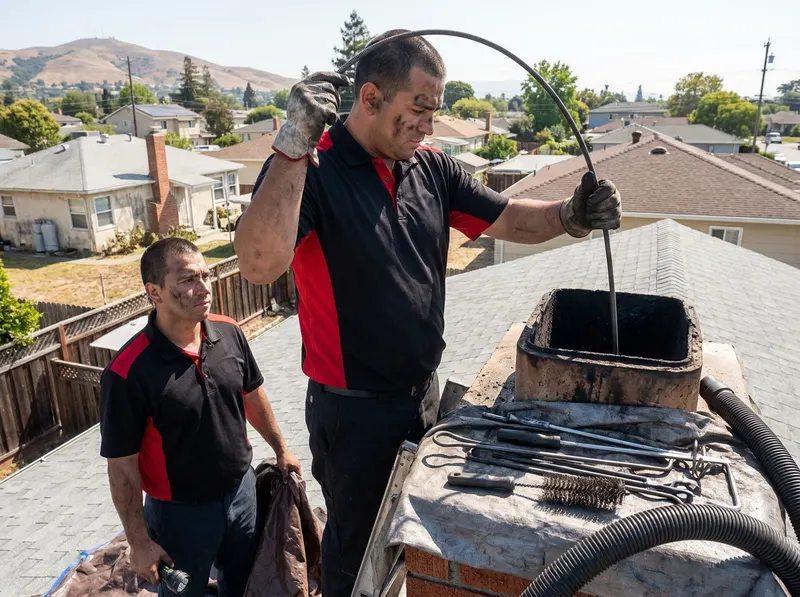
A chimney sweep is warranted when a fireplace smokes back into the room, draws weakly, gives off a musty campfire odor in summer, or has not been inspected in several years. NFPA 211 sets the widely used benchmark: an open fireplace should be inspected annually and swept when 1/8 inch (about 3 mm) of creosote has accumulated on the flue walls. Creosote is the tar-like residue left by wood smoke; a 1/4-inch (glazed) layer is the point at which a chimney fire becomes a real risk, which is why the inspection report matters as much as the brushing.
The Chimney Safety Institute of America (CSIA) defines the inspection levels used on every visit. A Level 1 inspection covers the readily accessible interior and exterior of a chimney in continued service with no changes, this is the standard companion to a routine chimney cleaning. A Level 2 inspection adds a video scan of the flue interior and is called for after a property sale, a chimney fire, or a change of fuel or appliance. Homes in the older sections of Cherryland and Harder-Tennyson often have unlined or clay-tile flues where a Level 2 scan is the honest call before another burning season.
Wood-burning fireplaces across Hayward Highland, Fairway Park, and Palma Ceia carry the heaviest creosote, since seasoned oak and softwood leave more residue than gas logs. A gas fireplace still needs the flue checked for debris, bird nests, and blockages, but the sweep is lighter and often quicker. Mount Eden and Glen Eden homes near the hills see more animal and leaf intrusion, so a missing or damaged rain cap frequently turns up during the inspection. In those cases chimney cleaning and cap installation can be handled on the same visit, the flue is measured during the sweep, and a stainless cap is fitted once the crown is clear, which spares a second trip and a second trip charge.
Decision-fit is straightforward: if the fireplace has been used every winter and looks sooty, book a standard sweep with a Level 1 inspection. If the home was recently bought in Jackson Triangle or Longwood-Winton Grove and its history is unknown, or if there was ever a loud roaring or a chimney fire, request the Level 2 video scan first so hidden flue cracks are seen before more heat goes up the chimney. If the only symptom is water stains on the ceiling near the chimney chase, the fix is usually a cap or crown repair rather than a sweep. The trade-off with skipping the annual sweep is compounding: creosote hardens into a glazed layer that a routine brush cannot remove, which raises both the fire risk and the eventual cost.
One point that prevents a common misunderstanding: a chimney sweep is not a repair service on its own. The sweep and inspection tell you the condition and produce photo evidence; any masonry, liner, or cap work is quoted separately and never bundled in as a surprise. Every visit in Southgate and the surrounding Hayward neighborhoods ends with a written report and photos of what was actually found in the flue, not a verbal 'trust us' recommendation.
Every job gets a firm, written price after a free on-site visit.
Tell us about your chimney sweep & cleaning job in Hayward and we'll send a clear, written quote, usually the same day.
 Hearthmaster Chimney Sweep